This guide explains how to use an Ageism Questionnaire to assess workplace and community bias in an evidence-based, ethical way. It reviews what “ageism” means, why measurement matters, and how results should be interpreted. Then it presents a practical comparison table of approaches, a step-by-step workflow, and clear conditions for responsible use.

An Ageism Questionnaire helps organizations and researchers document patterns of bias based on age, supporting clearer training goals and better decision-making. Used responsibly, it can surface experiences, perceptions, and workplace barriers—while also protecting respondents through careful design, scoring transparency, and ethical handling of sensitive responses.
In practice, an ageism questionnaire is most useful when it functions as a structured listening tool. It gathers evidence about what people experience and believe, then helps leadership locate the specific workplace mechanisms that may be producing unfair outcomes—such as inconsistent promotion criteria, uneven mentoring access, meeting participation norms that disadvantage certain age groups, or assumptions about “adaptability” and “future potential.” When it’s done well, the instrument doesn’t merely collect data; it creates a foundation for targeted change, measurable accountability, and ongoing improvement.
In this article, you’ll learn what to look for in an Ageism Questionnaire, how to implement it with consistency, and how to interpret outcomes without overclaiming. We also include a practical supplement—presented as a comparison table, a step-by-step guide, and conditions/requirements—placed after the main conceptual groundwork.
Ageism refers to stereotyping, prejudice, and discrimination directed toward people because of their age. An Ageism Questionnaire typically measures self-reported experiences (e.g., being excluded from opportunities), perceptions (e.g., beliefs about how older or younger workers are treated), or attitudes (e.g., agreement with statements that reflect bias). The intent is not to “label” individuals, but to describe group-level patterns so organizations can reduce harmful practices.
From an expert perspective, the key analytical idea is that questionnaires are measurement tools. They produce scores or category results that reflect what respondents choose to report at the time of survey completion. That means the instrument’s quality—its wording, response options, coverage of relevant contexts, and reliability—matters as much as the final findings.
It’s also important to recognize that questionnaire results are not identical to behavioral data. People may interpret questions through their own experiences, expectations, and language norms. For instance, two respondents can both face similar workplace decisions but interpret the fairness differently, leading to different survey ratings. Ageism questionnaires should therefore be treated as an evidence source that captures lived perspectives and perceived treatment—useful for diagnosis, culture monitoring, and program evaluation—while still requiring triangulation with other data.
Many ageism instruments aim to separate at least three related constructs:
Even when a questionnaire is labeled “attitudes-focused” or “experiences-focused,” real-world responses often blend these constructs. For example, a statement like “Older employees are passed over for challenging projects” may represent both an attitude (stereotype about older workers) and an experience (the respondent’s belief based on observed or personal events). That’s not automatically a flaw; it is a reason to interpret results thoughtfully and align item content with stated objectives.
Many employers, public institutions, and researchers use an Ageism Questionnaire to:
Importantly, well-designed measurement is linked to action. A questionnaire alone rarely changes culture; it helps organizations decide what to change and how to evaluate whether change is working. The strongest programs treat measurement as a cycle: listen, interpret, intervene, retest, and refine.
Ageism questionnaires also address a practical challenge: bias is often subtle, distributed across many everyday decisions, and expressed through “common sense” assumptions. People may hesitate to report direct discriminatory behavior, but they may acknowledge patterns through survey items that feel less accusatory and more reflective. This is one reason ageism questionnaires can be complementary to grievance systems.
For an Ageism Questionnaire to be meaningful, experts focus on several pillars. If any pillar is weak, the results can become ambiguous, unfair, or misleading.
Age-related bias can appear in hiring, promotion, mentoring, workload assignment, technology adoption, leadership expectations, and communication style. A strong instrument includes items aligned to these domains rather than relying on generalized statements.
Content validity is the “fit” between questionnaire items and the real workplace processes you want to understand. In ageism measurement, that means mapping items to concrete decision points. For example:
Content validity also involves avoiding blind spots. If your organization’s primary risk is in training access and reskilling, an instrument that focuses mostly on hiring and promotions may miss the highest-signal domains. Conversely, if you focus on leadership development, items should capture what happens when successors are identified, supported, and evaluated.
Very questionnaires use Likert-type response formats (e.g., strongly disagree to strongly agree). Consistency helps comparison across groups. The wording should avoid double-barreled items (two ideas in one statement) and should clarify whether the respondent is evaluating experiences, perceptions, or attitudes.
Scaling is not just “technical.” It affects meaning. When response options are too broad or unclear, different people interpret the scale differently. That creates measurement noise, and noise can look like difference between groups even when no real difference exists.
Experts also ensure that items are not leading. For example, avoid phrasing that presumes the bias as fact (“People like me are always ignored because they’re old”) if your goal is to measure prevalence perceptions in a neutral way. Instead, use phrasing that allows respondents to indicate the degree to which the statement matches their experience or view.
Another scaling decision is whether to use frequency-based options (e.g., “never” to “very often”) or agreement-based options. Frequency can be more intuitive for experiences, but agreement can be easier for attitudes. Hybrid instruments sometimes use both types—but only if the scoring plan clearly distinguishes constructs.
Reliability means the instrument produces consistent results under comparable conditions. For example, internal consistency (often assessed via Cronbach’s alpha or related metrics) may be reported by test developers. Where reliability information is not available, users should be cautious about drawing strong conclusions.
Reliability is especially important when the survey will be used for benchmarking. If a questionnaire’s items fluctuate widely due to wording issues, small observed changes over time might reflect measurement instability rather than real improvement or decline.
Beyond internal consistency, reliability can also include:
If you adapt an instrument from one organization or country to another, measurement invariance becomes an especially important concern, because cultural and workplace norms shape how people respond to bias-related questions.
Because age groups may differ in communication preferences and familiarity with survey formats, the questionnaire should use plain language, readable formatting, and an inclusive structure. Accessibility supports better response quality.
Accessibility includes practical details such as:
Fairness also concerns how items are interpreted. Some age-related terms may carry different connotations across demographics. A careful design avoids slang or region-specific phrasing that could inadvertently stereotype certain groups.
Ageism responses may touch on discrimination experiences or professional concerns. Experts therefore prioritize confidentiality, minimized identifying information, secure data handling, and clear explanations about how data will be used.
Ethics in ageism measurement is not only about data security. It’s also about power and psychological safety. Employees may worry that reporting bias could trigger retaliation or affect career prospects. Ethical safeguards reduce that risk by:
Ethics also includes avoiding “blame-by-score.” A questionnaire must be framed as organizational learning rather than personal accusation. Otherwise, respondents may distrust the process and either disengage or respond strategically rather than honestly.
Interpretation is where many organizations either succeed or fail. An Ageism Questionnaire typically yields:
However, results should not be interpreted as proving intent or individual wrongdoing. Questionnaire scores reflect respondents’ perceptions or reported experiences. In an evidence-based approach, you treat the instrument as a signal that guides follow-up—such as focus groups, policy review, and observational or administrative data analysis—rather than as a final verdict.
Overclaiming can happen in several predictable ways:
A careful approach to interpretation involves:
It also helps to create an interpretation rubric. For example:
When you deploy an Ageism Questionnaire, treat the project like an integrated process rather than a one-time form. Experts generally recommend the following lifecycle:
Below are practical details that often determine whether an ageism questionnaire becomes a helpful tool or a forgotten initiative.
Different stakeholders require different levels of detail. Leadership may need aggregated domain trends to prioritize investment. HR and compliance may need deeper item-level patterns to evaluate policy pathways. Managers may need clear guidance on what behaviors to adopt, grounded in survey themes. Employees may need feedback that explains what will change and what timeline is realistic.
A transparent reporting plan also reduces rumor. If employees do not see any outcomes, even accurate survey data can feel useless and politically risky.
Even if survey results highlight patterns, you should avoid using the questionnaire as a basis for disciplining a manager or singling out an individual without due process. Ageism questionnaires are better suited to guiding organizational interventions—such as revising processes, reinforcing norms, and clarifying criteria—than to directly identifying fault.
If individual concerns exist (e.g., harassment or specific discriminatory incidents), those should be handled through appropriate HR and legal processes, with a separate channel that supports confidentiality and procedural fairness.
Plan how respondents will be heard after the survey. “Follow-up” can include listening sessions, focus groups stratified by age and department, manager workshops, and targeted audits of specific HR processes. If possible, include a mechanism for participants to indicate whether they want to join a follow-up discussion—while still protecting anonymity.
Follow-up pathways can also be used to explain interpretation. For example, if the survey shows high agreement that “older employees have fewer development opportunities,” follow-up can help determine whether the cause is scheduling constraints, manager sponsorship patterns, training selection criteria, or differences in how opportunities are communicated.
An ageism questionnaire should not stand alone. It works best as part of a larger initiative that includes:
When organizations connect the questionnaire to measurable process changes, employees are more likely to trust future surveys and participate meaningfully.
Even well-intentioned teams can run into predictable problems. Here are frequent pitfalls and expert remedies.
High agreement on an item indicates that more respondents selected that option—not necessarily that everyone experiences the same issue. Consider response distributions and the instrument’s measurement structure.
Remedy: examine whether the score is driven by a minority of respondents. If a subset reports strongly negative experiences, the organization can tailor follow-up to that context rather than treating the whole workforce as equally affected.
Two departments can show different patterns due to staffing structure, manager behaviors, workload cycles, and opportunity availability. Always accompany interpretation with contextual information.
Remedy: collect domain-specific contextual notes. For example, if one department uses a different promotion process or has different training access, interpret survey differences as potentially reflecting those mechanisms.
If you need to understand hiring bias, a questionnaire focused only on attitudes may miss key signals. Align domains to your objectives before choosing items.
Remedy: build an objective-to-domain map. If your goal is recruitment and selection, include items that capture experience of interviews, selection criteria clarity, and perceptions of “fit” evaluations that may mask age-related assumptions.
If respondents report concerns but the organization never responds, trust declines. Plan how results will be reviewed and what actions are possible within realistic constraints.
Remedy: publish a “results-to-actions” commitment. Even if budgets are limited, show which levers the organization will adjust and what timelines are realistic.
Organizations sometimes focus on whether differences between age groups are statistically significant rather than whether the issue is actionable.
Remedy: prioritize effect size, domain relevance, and severity signals. A smaller difference can still be critical if it points to high-impact barriers in career development.
Some respondents may be uncertain because they haven’t observed enough workplace decisions. “Neutral” may reflect limited visibility rather than unbiased beliefs.
Remedy: interpret response patterns carefully. When possible, include follow-up questions about whether respondents have direct experience with the process being measured (e.g., promotion, training selection).
Adaptations and replications are common, but if the instrument is modified heavily without revalidation, measurement may degrade.
Remedy: limit changes when using established items, run pilots, and ideally conduct validation activities appropriate to your context.
From an industry expert’s viewpoint, the value of an Ageism Questionnaire lies in turning subjective experiences into structured insight. Yet, culture change requires a multi-level strategy:
In other words, measurement is the starting point—not the end. The organization’s response determines whether the questionnaire becomes a constructive tool or an administrative exercise.
To make this practical, teams can translate survey findings into a “fairness change map.” A fairness change map ties each domain (e.g., “development opportunities,” “meeting participation,” “feedback style”) to specific interventions:
When done consistently, this reduces the risk of “survey theater” where leadership acknowledges results but does not change the underlying drivers of bias.
| Approach | What It Captures | Strengths | Limitations | Top Use Case |
|---|---|---|---|---|
| Attitudes-focused Ageism Questionnaire | Beliefs and agreement with age-related stereotypes | Helps identify training themes; easier to compare over time | May not capture day-to-day experiences | Designing learning modules and communication campaigns |
| Experiences-focused Ageism Questionnaire | Perceived or reported bias in workplace/community interactions | Direct relevance to harm-reduction and process changes | Requires careful confidentiality and interpretation | Diagnosing barriers in HR practices and internal processes |
| Hybrid (attitudes + experiences) instrument | Both perceptions and self-reported events | More complete picture; supports targeted interventions | Longer surveys may reduce completion rates | Comprehensive organizational assessments |
| Qualitative follow-up (interviews/focus groups) | Nuance behind survey responses | Clarifies “why” behind higher item scores | Not statistically generalizable | Explaining results and shaping feasible next steps |
Because the term “Ageism Questionnaire” can refer to different instruments, expert practice is to ground decisions in established measurement principles and credible guidance. When selecting or adapting items, teams should rely on:
For general methodology and ethical guidance, reputable research bodies and professional ethics frameworks are recommended. One accessible starting point is the U.S. Equal Employment Opportunity Commission guidance materials on age-related discrimination concepts, which can inform how survey domains map to potential workplace issues. For workplace bias measurement methodology, professional survey research references and psychometrics texts provide standards for reliability and validity. (Consult your organization’s legal/compliance function for jurisdiction-specific requirements.)
When adapting items, also consider language localization and workplace context. A question that fits one industry’s promotion structure may not fit another. In such cases, adaptation must preserve the meaning of the construct while adjusting wording to match local practice. Piloting helps determine whether the item still measures what it is intended to measure.
Use the following workflow to keep the process rigorous and fair.
The following conditions help ensure your Ageism Questionnaire implementation is defensible.
An Ageism Questionnaire is used to measure perceptions, reported experiences, or attitudes related to age-based bias. Organizations typically use it to identify where bias may be affecting opportunities, interactions, or decision processes.
Yes, when interpreted carefully. Experts treat questionnaire outputs as signals requiring follow-up—such as targeted training, policy adjustments, manager coaching, and qualitative listening sessions—to translate findings into practical change.
Usually not responsibly. Many experts recommend group-level analysis to reduce risk of misattribution and harm. If individual follow-up is needed, it should be handled through appropriate HR and legal processes and supported by multiple evidence sources.
Items should be specific, clear, and relevant to real situations. They should avoid ambiguity, double meanings, or language that could be easily misinterpreted. Piloting helps ensure comprehension across age groups.
Reliability refers to consistency of measurement. A reliable instrument produces similar results under comparable conditions. If reliability metrics are not provided by the instrument developer, users should proceed cautiously.
There is no single ideal length. Experts balance coverage against completion rates. A focused instrument with essential domains can outperform a longer survey with weaker completion quality.
It depends on governance goals and respondent protection. For sensitive discrimination-related items, anonymity or strong confidentiality is often preferred. The final choice should follow privacy guidance and internal policy.
Common practice is periodic measurement (e.g., annually or after major training/program changes). The timing should match intervention cycles so that results can be meaningfully evaluated.
Differences may indicate varying experiences, perceptions, or reporting tendencies. Experts analyze patterns by domain and context, then triangulate with qualitative evidence rather than concluding that one group is uniformly responsible.
When differences appear, an effective next step is to ask a “mechanism question”: What workplace process could produce this difference? For example, if younger employees report fewer development opportunities while older employees report satisfaction, the mechanism could be differences in time-in-role eligibility for programs, mentorship nomination patterns, or scheduling constraints that affect who can attend trainings.
No. A questionnaire supports organizational learning and pattern detection, but it does not substitute for formal investigations when specific incidents are alleged. Any investigation should follow appropriate legal and procedural standards.
However, an ageism questionnaire can help investigations by highlighting where to look. If the survey indicates persistent concern in performance reviews, you may prioritize reviewing those processes for compliance and fairness.
Low response rates can bias results. Experts examine whether certain groups are underrepresented and consider follow-up methods to improve participation and representativeness.
Remedies can include targeted reminders, additional communication through trusted channels, reducing survey burden, and ensuring that employees understand how confidentiality is protected. In some cases, you may supplement with qualitative interviews to capture views from those who did not respond, while keeping ethical safeguards in place.
Report aggregated findings with clear interpretation language. Avoid identifying small groups, and pair results with a transparent action plan describing what will change and when.
Responsible reporting includes acknowledging limitations. For example, if the questionnaire measures perceptions rather than observed discrimination incidents, you should say so clearly and then explain how the organization will use the findings.
A well-implemented Ageism Questionnaire can strengthen an organization’s ability to recognize age-based bias and reduce avoidable harm. The value comes from disciplined design, ethical administration, careful interpretation, and a credible commitment to action. When measurement is connected to improvements in policies, managers’ day-to-day decisions, and learning opportunities, the questionnaire becomes more than a report—it becomes a tool for fairness.
To keep the process meaningful, treat the survey as part of a learning system rather than a one-time benchmark. Continuous improvement depends on closing the loop: employees share perceptions; leaders interpret responsibly; interventions change specific workplace mechanisms; and the organization evaluates whether fairness outcomes improve.
Note: This article intentionally provides objective, method-focused guidance. If you are selecting or adapting a specific instrument, consider engaging qualified professionals (e.g., survey methodologists, HR compliance specialists, and legal advisors) to ensure suitability for your context.
Navigating Owner Operator Land for Trucking Success

Owner Operator Land: Practical Guide for Independent Truckers

Owner Operator Land: A Practical Guide for Drivers

Owner Operator Land: A Practical Guide for Buyers

A Practical Guide to Owner Operator Land

Owner Operator Land: Practical Guide for Fleet Decisions

Owner Operator Land: A Practical Guide for Shippers

Owner Operator Land: A Practical Guide for Operators

How Owner Operator Land Shapes Fleet Owner Decisions


Using an Ageism Questionnaire for Fair Decisions
This guide explains how an Ageism Questionnaire can help organizations evaluate age bias in hiring, training, and service delivery. It provides objective background on what ageism means, why structured measurement matters, and how to design a reliable, respectful assessment process grounded in evidence-based workplace practice and human rights standards.

Using an Ageism Questionnaire for Fairer Decisions
This guide explains how to design, administer, and interpret an Ageism Questionnaire to reduce bias in workplaces and services. An objective overview follows on what ageism is, why structured questioning matters, and how careful scoring supports ethical, defensible decisions. It also clarifies common pitfalls and offers expert guidance for implementation.

Using an Ageism Questionnaire for Objective Workplace Change
This guide explains how an Ageism Questionnaire can help organizations measure age-related bias and plan practical improvements. It provides objective background on the concept of ageism, why structured assessment matters, and how to interpret results responsibly—especially when you need defensible evidence for training, HR policy updates, and inclusive culture initiatives.

Using an Ageism Questionnaire for Fairer Decisions
This guide explains how an Ageism Questionnaire can support objective, consistent decisions in healthcare, hiring, and service design. It then outlines what ageism is, how questionnaires help reduce bias, and what “good” assessment looks like in professional settings, drawing on established frameworks from major human-rights and public-health organizations.
Using an Ageism Questionnaire for Fair Workplace Culture
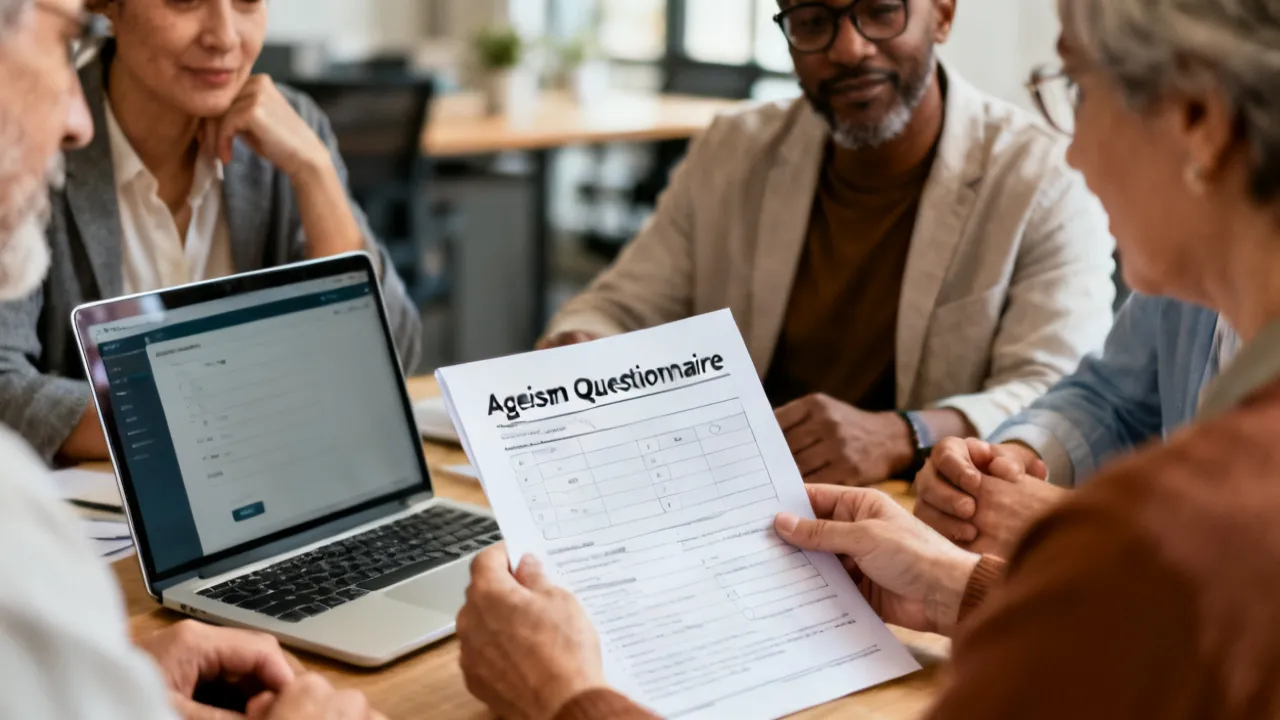
This guide explains how to use an Ageism Questionnaire to identify age bias risks and improve fairness in organizations. It describes what ageism means, why measurement matters, and how questionnaires can be designed and interpreted with care. It also sets out practical conditions for implementation and compares common approaches objectively.
How to Use an Ageism Questionnaire Responsibly
This guide explains how to use an Ageism Questionnaire to assess workplace and community bias in an evidence-based, ethical way. It reviews what “ageism” means, why measurement matters, and how results should be interpreted. Then it presents a practical comparison table of approaches, a step-by-step workflow, and clear conditions for responsible use.
