This guide explains how to evaluate “Trucks for Sale and Instalment” options with careful budgeting and document checks. It sets out objective background on how installment purchases work in commercial trucking, what to verify in vehicles and contracts, and how suppliers typically structure terms. You’ll also find a comparison table, a step-by-step approach, and requirements to help you decide with confidence.

If you’re looking at Trucks for Sale and Instalment, the top outcomes usually come from treating the vehicle purchase and the payment plan as one combined decision. The truck’s condition, total cost over time, and the installment contract terms (down payment, tenure, interest/fees, and end-of-plan options) should be reviewed in the same session—before you commit. From an industry perspective, this is where many buyers either protect their cash flow or accidentally lock themselves into avoidable costs.
In practical terms, buyers typically ask two questions: “Which trucks for sale match my routes and payload needs?” and “How will an installment plan impact my monthly budget, maintenance reserve, and insurance coverage?” A robust plan answers both with verifiable information: vehicle history, inspection results, supplier documentation, and a transparent schedule of payments.
It’s easy to underestimate how quickly the “right truck” becomes the “wrong truck” if the installment plan includes restrictive conditions, high finance charges, unclear title transfer rules, or penalties that trigger when cash flow is disrupted. Similarly, a good payment plan can still fail if the truck itself is under-specified for your routes, has major faults hidden behind superficial cosmetic condition, or lacks a realistic service and parts pathway in your area.
Because of this, you should not evaluate the vehicle separately from the contract. Think of the deal as three linked layers: (1) technical readiness (engine, driveline, brakes, tyres, electrics), (2) operational compatibility (body type, axle configuration, fuel efficiency in your duty cycle), and (3) financial structure (down payment timing, monthly instalment amount, finance charges, and ownership transfer or repossession conditions). When those three layers align, installment buying becomes a workable strategy; when they don’t, you can lose control of both uptime and cash flow.
Industry professionals generally evaluate four pillars. When any pillar is weak, the deal becomes risky—especially for commercial operators who rely on uptime. In trucking, uptime is not just a metric; it’s the basis of revenue. A single long repair delay can cascade into missed delivery windows, penalties to customers, and financial stress that makes the installment schedule harder—not easier—to manage.
To keep the decision objective, focus on documentation you can review: inspection sheets, maintenance records, ownership/registration status, and a written breakdown of installment terms. This approach reduces ambiguity and supports better budgeting across the vehicle’s expected service life.
Another practical layer worth adding—especially for fleet buyers—is to evaluate the “risk profile” of both the truck and the finance arrangement under stress. For example: what happens if the truck needs a major component repair during the third or fourth month, when cash flow is already stretched? If the contract has strict repossession triggers, the financial consequences of a repair event might be far greater than most buyers initially plan for. Likewise, if the truck has known wear items (e.g., tyres nearing end-of-life, brake systems requiring near-term replacement), the “cheap monthly payment” can become expensive when those wear items are added.
In other words: treat installment buying like a system. You’re not only financing a truck; you’re funding a maintenance and compliance journey over time. The contract should support that journey rather than undermining it.
While specific terms vary by supplier, installment purchasing generally follows a pattern: a down payment to reduce financing exposure, a monthly installment calculated over a set tenure, and an ownership or title transfer condition that depends on local practice and contract language.
From a procurement standpoint, you should also expect some form of eligibility assessment (for example, business registration details, credit profile, or income verification). For operational buyers—fleet owners, transport contractors, and small logistics firms—the supplier may also evaluate whether the truck’s use case aligns with risk underwriting.
It’s wise to request a document package that includes: installment schedule, fee list, insurance expectations, and the process if you need to settle early, replace the vehicle, or address unforeseen maintenance issues.
To improve clarity, ask the supplier to provide three distinct totals (not just one “monthly” number):
Some deals advertise low monthly amounts while hiding high fees in “documentation,” “processing,” “insurance add-ons,” or charges that only become visible once you request the full breakdown. A complete cost view helps you compare deals fairly and prevents buyers from comparing only the installment figure rather than the total plan cost.
Also pay attention to how the supplier accounts for missed payments or late charges. Some contracts penalize late payments with immediate interest, additional processing fees, or administrative charges. Others may suspend certain protections (like extended warranty) after a missed payment event. Those details can materially change your real cost and operational stability.
Installment financing can broaden access to equipment, but it can’t correct a mismatch between the truck and the task. Before comparing Trucks for Sale and Instalment offerings, define your operating needs:
Industry specialists often recommend creating a shortlist of trucks with the right configuration, then narrowing further based on inspection results and service history—rather than selecting primarily on affordability of the monthly payment.
To make this more concrete, consider how duty cycle should influence your choice. A truck used primarily on short, stop-and-go urban routes may stress brakes and clutches differently than one used on long-haul highway routes. A truck used in hot climates may place extra burden on cooling systems and fans. Trucks that operate in dusty conditions can experience faster filter loading, accelerated wear in air intake systems, and higher maintenance needs if not managed properly. If you select a truck purely based on “available at an installment plan,” without assessing duty cycle fit, you can end up financing a vehicle that will cost more to run than you expected—while still requiring the same monthly installment.
Also consider whether your operation requires specialized equipment. For refrigerated loads, you’ll need reliable refrigeration units and proper electrical supply. For construction or demolition-related hauling, you’ll need a body type and drivetrain that can handle shock loads and frequent stop-start movement. For hazardous materials (where allowed), you may need compliance-ready documentation and specific equipment condition standards. Even when the contract doesn’t explicitly refuse certain use cases, the truck’s mechanical capability and documentation readiness matter for both legality and insurance coverage.
In short: select a truck that fits your work, then use the installment plan as a tool for cash flow—not as a substitute for technical fit.
Because installment buyers are committing to a good payment schedule, the due diligence should be unusually methodical. Below are verification areas used in professional procurement workflows.
One helpful mindset: assume that what is not written clearly can be interpreted later in a way that doesn’t favor you. The goal is to make sure the contract aligns with the truck’s documented condition and with how repairs, handover, and compliance tasks will actually be handled.
Request an inspection report and, if possible, a third-party inspection. Confirm the status of major systems: engine, transmission, differential, braking components, steering, suspension, tires, and electrical systems. For used trucks, maintenance history is as important as visible wear.
When you review inspection evidence, don’t treat it as a checkbox. Ask whether the defects disclosed are minor, monitored, or likely to become urgent under your operating conditions. For example, a small oil leak might be low priority for a buyer who plans light duty, but it might be a significant issue for heavy mileage and high operating temperatures. A near-worn brake lining might be manageable in the short term if your service schedule can accommodate it immediately, but it could become a safety and cost problem if it leads to rotor damage or an emergency downtime event.
Also ask for clarity on the “repair status” of items noted during inspection. Some inspection reports list issues but do not indicate whether they were corrected prior to sale. Others might show corrections with invoices or part numbers. You want the supplier to provide evidence: repair invoices, parts replaced, dates of work, and whether any warranty applies to that replaced work.
If third-party inspection is possible, choose a reputable service provider familiar with the truck’s make and model. Focus on interpreting driveline and braking performance rather than only visually inspecting parts. A test drive can reveal transmission behavior, clutch engagement quality, brake pull, steering alignment, and electrical anomalies under load.
Ensure the supplier can provide clear documentation for registration, identification numbers, and any existing liens (if applicable). If the contract ties installment payments to title transfer, the terms should clearly state what happens if payments are delayed.
In installment arrangements, ownership and title transfer may be structured differently. In some models, you may take possession of the truck while the supplier retains title until you complete payment obligations. In others, title transfer might depend on registration steps or specific documentation milestones. Either way, you need written clarity on:
Also confirm whether the supplier’s paperwork includes proper identification numbers and whether these match the truck’s physical identification. For fleet operations, even small inconsistencies can cause registration delays or compliance confusion. Delays matter because installment schedules often expect timely compliance with registration and insurance requirements.
Before signing, request the complete installment schedule and a fee breakdown. Ask for a written explanation of:
To reduce future ambiguity, ensure the contract includes a payment calendar with exact due dates and states the payment method. For example, if direct debit is required, confirm the bank account details, the timing of debit processing, and what constitutes a successful payment. If you plan to transfer funds manually, confirm the acceptable channels, reference codes, and how late status is determined.
Next, examine penalty clauses carefully. Some contracts charge a fee for each missed installment and also apply interest on the outstanding balance. Others might accelerate the full balance under “default” conditions, which can be financially catastrophic if a business temporarily experiences cash flow disruptions. You should also look for clauses that allow the supplier to repossess or suspend benefits after a particular number of missed payments or after a certain threshold is crossed.
Also verify whether the contract includes a grace period. A grace period can help prevent unnecessary default for small administrative delays—such as bank processing time, public holidays, or invoice timing issues. Even if the supplier offers flexibility, don’t rely on verbal promises; insist on contract wording that clarifies what will happen.
Finally, clarify the “early settlement” procedure. If you want to refinance or pay off early, you need to know how the settlement figure is calculated, when it must be paid, what administrative steps apply, and whether there are penalties for early repayment. The early settlement terms can affect strategic decisions later, such as upgrading to a newer truck sooner than planned.
Installment plans often interact with insurance requirements. Confirm minimum coverage expectations and whether the supplier requires coverage with a particular provider or only sets minimum coverage standards. Also, clarify what maintenance responsibilities rest with you versus what the supplier includes.
From an operational point of view, insurance isn’t only about meeting contract requirements. It also affects how quickly the truck can return to service after accidents or major failures. Ask what the contract expects in terms of:
Maintenance responsibilities should be spelled out. Some contracts require servicing at authorized service centers or require using approved parts. Others allow maintenance at independent workshops as long as it meets certain standards and is documented. If you are running a fleet, independent maintenance can often be more cost-effective and faster—so you want contractual permission for that flexibility. If you do not have permission, you might be forced into longer repair cycles with less favorable pricing.
Also consider “operational readiness” requirements for handover. The supplier may need to ensure inspections, registrations, or pre-delivery checks are completed before the truck begins revenue-generating duty. If those steps are incomplete, you could face delays that impact your revenue but not necessarily your installment due dates.
Compare the supplier’s service capability: access to parts, typical turnaround times, warranty coverage (if applicable), and escalation process for disputes. A truck that looks good during purchase can become expensive if repairs require long lead times.
After-sales support is particularly important for installment purchases because your cash flow is already committed. If the supplier provides a limited warranty, you need to understand how repairs will be handled during that warranty period. For example:
Supplier reliability also includes “communication and response.” When a truck breaks down, the ability to quickly approve repairs, arrange parts, and confirm service timelines can be the difference between a minor downtime event and a major operational disruption. If the supplier is slow to respond to operational issues, the installment plan can become a source of financial pressure.
To evaluate reliability, ask how many service centers are available in your region, what the average parts lead time is for common components, and whether there are common escalation pathways if a claim dispute occurs. Ideally, the supplier can provide references—such as sample service workflows or performance metrics from similar buyers.
When buyers focus only on installments, they may neglect costs that rise once the truck enters daily operation. A prudent approach is to budget for:
Objective budgeting is especially important when selecting Trucks for Sale and Instalment because the installment commitment can continue even when the truck is under repair or downtime. The goal is to ensure the business can maintain payment obligations while still funding operational continuity.
To make the budgeting more accurate, many fleet operators run a cash flow model for at least one full year (or at minimum the first few months of the installment plan). The model typically includes:
It’s also wise to budget for compliance costs. Depending on your local rules, you might need periodic inspections, safety checks, or documentation renewals. Compliance processes can have administrative fees, time costs, and sometimes replacement of components required to pass inspection.
Another frequent oversight is driver availability and performance. Even if the truck is mechanically ready, if you don’t have enough qualified drivers or if driver licensing renewals are delayed, the truck’s revenue-generating time can drop. If revenue drops but installment obligations remain fixed, financial pressure rises quickly. That’s why budgeting should include training and compliance for drivers and a buffer for scheduling disruptions.
Finally, incorporate a “repair downtime scenario.” For example, assume a month in which the truck has an unexpected repair downtime of one to two weeks. Then test whether your cash reserves can cover installment obligations, temporary logistics solutions, and accelerated maintenance.
| Evaluation Item | What to Look For | Why It Matters |
|---|---|---|
| Down payment and timing | Exact amount, due date, and payment method | Impacts immediate cash flow and eligibility for delivery/registration |
| Installment schedule | Monthly amount, due dates, and total number of payments | Enables accurate budgeting and reduces surprises |
| Financing charges and fees | Interest/finance charges (if any), processing/admin fees, documentation fees | Determines total cost of ownership over the plan |
| Ownership/title conditions | When title transfers and what happens under non-payment | Protects legal clarity and mitigates disputes |
| Maintenance and warranty coverage | Any warranty scope, exclusions, and how repairs are approved | Affects downtime risk and repair predictability |
| Vehicle inspection evidence | Inspection report, maintenance records, and defect disclosure | Reduces the chance of paying installments on an unreliable asset |
| After-sales support | Service network coverage, parts availability, typical response times | Improves uptime and supports lifecycle costs |
| Early settlement terms | Whether you can close early and any settlement charge | Supports future refinancing or operational upgrades |
| Compliance responsibilities | Who handles inspections/registration steps and required documentation | Prevents delays and legal non-compliance |
When comparing offers, consider the “hidden levers” that can change your risk. For instance, two suppliers might offer similar installment amounts but one includes more favorable warranty or clearer repair approvals. Another might offer a low monthly instalment but impose strict servicing at specific centers or restrict your choice of insurance provider. Those differences may not show up in the table if you only fill the basic fields. To improve your comparison, add notes and ask follow-up questions on items like service approval time, parts lead times, and the contract’s definition of default.
To make this process even safer, you can add a “handover readiness” step. Handover is often treated like a formality, but with installment purchases it becomes a critical operational milestone. Before signing off, confirm that the truck’s documentation is complete (registration steps, identification numbers, safety and inspection readiness) and that any scheduled repairs identified during inspection have been completed. If the contract allows repairs to be done after delivery, make sure the timeline and acceptance criteria are written, so you don’t receive a truck that you are forced to keep running in unsafe condition just to generate revenue.
Additionally, if your business is growing quickly, consider sequencing your procurement decisions. Buying multiple trucks at once can strain your overall cash flow and create competition for maintenance slots or service capacity. If several trucks require maintenance around the same time, your operating expenses and installment obligations can cluster. Even if each deal is manageable individually, combined obligations may create a risk profile that you haven’t modeled.
Although details vary by jurisdiction and supplier policy, installment truck purchases commonly include conditions similar to the following.
In practice, these conditions influence not only the finance approval but also the timing of operations. For example, if insurance is required before delivery, you might need to secure a policy quickly or risk delivery delays. If inspection acceptance is required, you may need to allocate time for acceptance checks and documentation. If payment authorization takes time to set up, it can delay installment commencement and create confusion over due dates.
Therefore, ask the supplier for a timeline that includes key milestones: down payment due date, insurance start date, delivery date, acceptance inspection date, and first installment due date. Make sure these dates align with your operational plan.
Also confirm what happens if any milestone slips. For example, if registration documentation is delayed due to administrative processing times, does the supplier pause installment commencement? If not, you might pay installments while the truck remains unusable. That kind of misalignment is preventable when you request written timelines and contract wording that governs delays.
Many operators prefer installment purchasing because it can align equipment procurement with operating cash flows. This is especially relevant when growing fleets, replacing aging vehicles, or scaling capacity without paying the entire price at signing.
However, responsible installment buying also requires understanding that financing costs and operational risks do not disappear. A professionally managed procurement process accounts for both the financial commitments and the maintenance realities of running heavy-duty equipment.
For objective context, buyers can reference public guidance and industry research on truck financing and fleet management practices. For example, the U.S. Federal Reserve publishes consumer and credit data via its Statistical Releases, and the U.S. commercial transport sector often uses reporting frameworks from the U.S. Census Bureau and other official sources to understand freight demand trends. For tire, brake, and vehicle safety considerations, official vehicle safety standards and inspection programs are typically administered through national or regional transport authorities.
Beyond general finance context, fleet operators use installment purchasing to manage balance sheet strategy. Instead of tying up large upfront capital, they can fund other expenses like warehousing, hiring, driver training, route planning software, or customer acquisition. This can speed up scaling—provided the monthly obligations are sustainable and the truck’s operational readiness is verified.
There’s also a risk management perspective. Some operators view installment purchases as predictable fixed costs—assuming the contract and maintenance plan are well structured. The danger arises when the contract’s default clauses and the truck’s maintenance risk collide. If the truck has hidden faults, and the contract treats missed payments as severe defaults, then a single repair event can create financial cascading risks.
Responsible fleets mitigate that risk by building reserves, requiring documented inspections, maintaining service records, and negotiating reasonable contract protections where possible (such as grace periods, clear repair approvals, and transparent early settlement terms).
In fleet procurement reviews, problems often cluster in predictable places. If you anticipate them, you can reduce risk.
To expand on these issues, here are additional “failure patterns” that experienced buyers watch for.
Experienced operators reduce these failure patterns by using structured checklists and insisting on written documents. They also create a “procurement file” with copies of everything: inspection report, maintenance invoices, contract pages, installment schedule, and insurance confirmation. When a dispute occurs, the procurement file becomes your evidence base.
It typically refers to a truck purchase where the payment is split into installments over a set period rather than paid in full upfront. The exact terms depend on the supplier and the contract, including down payment, monthly amounts, tenure, and title/ownership conditions.
Request the full installment schedule and written fee breakdown. Compare total cost over the plan, including any interest or administration charges, and review ownership transfer and late-payment conditions—not only the monthly installment figure.
A used truck can be a good value if due diligence is strong. Ensure you obtain inspection evidence, maintenance records, and clear contract terms for any warranty or after-sales responsibilities. The installment plan increases the importance of verifying vehicle reliability before signing.
Commonly you should ask for: inspection reports, maintenance/service history (if available), proof of ownership status and identifiers, the full installment schedule, fee breakdown, and the contract pages covering ownership/title conditions, late payments, and early settlement.
Yes—plan for a maintenance contingency and ensure your operational revenue can cover both installments and repairs. Also ask whether the supplier offers early settlement terms, payment restructuring options, or formal dispute/repair pathways.
Suppliers often review identity and business details, verify financial eligibility, and require insurance coverage for the financed period. Some may also require specific compliance documentation before handover.
At minimum: engine and transmission performance, braking system condition, suspension health, steering responsiveness, electrical functionality, tire and wheel condition, and any documented repairs or defects disclosure. If feasible, use a third-party inspection for used trucks.
Look for established dealers or financing partners with transparent documentation processes, consistent service support, and clear contract terms. Verify their after-sales capability (parts availability and repair turnaround) and ensure their proposal includes a complete written schedule and fee breakdown.
Buying Trucks for Sale and Instalment can be a practical route to fleet growth when it’s approached with discipline. Treat the truck specification, inspection evidence, and installment contract as a single integrated decision. By following a step-by-step procurement process—verifying vehicle condition, auditing the payment schedule, and confirming after-sales support—you can improve operational reliability and keep budgeting aligned with real-world trucking costs.
Trucks for Sale and Installment Buying Guide

Trucks for Sale and Instalment: Smart Buying Guide
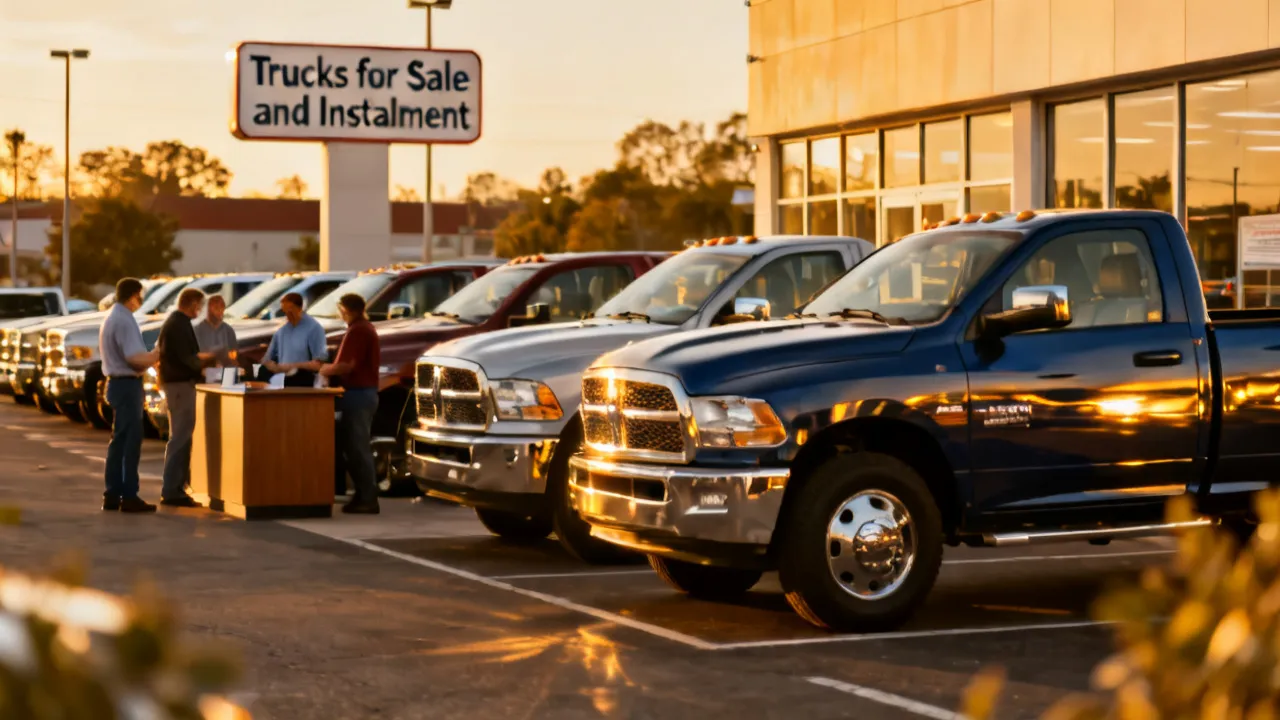
Trucks for Sale With Instalment Loan Options

Buying Trucks for Sale and Instalment Responsibly

How to Buy Trucks for Sale with Instalments

Trucks for Sale with Installment Options

Choosing Trucks for Sale and Instalment Options

Trucks for Sale and Instalment: Buying Guide

How to Buy Trucks for Sale and Instalment
How to Buy Trucks for Sale and Instalment
This guide explains how to evaluate “Trucks for Sale and Instalment” options with careful budgeting and document checks. It sets out objective background on how installment purchases work in commercial trucking, what to verify in vehicles and contracts, and how suppliers typically structure terms. You’ll also find a comparison table, a step-by-step approach, and requirements to help you decide with confidence.
