This guide explains how to design, administer, and interpret an Ageism Questionnaire to support fair hiring, retention, and training decisions. Ageism in employment affects communication, evaluation, and access to opportunities. Background sections define the concept, outline measurement principles, and connect questionnaire results to practical interventions. You’ll also find a conditions-and-requirements comparison and a step-by-step approach for responsible use.

An Ageism Questionnaire helps organizations identify patterns of age bias in workplace interactions, policies, and decision-making. When thoughtfully designed and ethically administered, it can reveal where assumptions about competence, health, learning ability, or “fit” are shaping evaluations—often without anyone intending harm. Used responsibly, the findings support targeted training, clearer procedures, and more consistent HR practices for recruiting, onboarding, performance management, and development.
To be effective, however, the Ageism Questionnaire must be treated as an evidence-based measurement instrument, not simply a pulse check or an outlet for frustration. The strongest outcomes come when the organization links measurement to decision points—such as recruitment screening, interview question design, performance feedback norms, training assignment rules, and promotion criteria—and then uses results to adjust process design. In that sense, the questionnaire operates like an early-warning system: it does not prove legal discrimination on its own, but it highlights where the organization’s day-to-day practices may produce unequal experiences by age-related group.
Just as important, an evidence-based approach helps reduce risks that can emerge when surveys are executed loosely. Without clear constructs, neutral wording, privacy safeguards, and domain-based reporting, an Ageism Questionnaire can generate confusion, mistrust, or misinterpretation. Employees may not know how their responses will be used, managers may defensively interpret findings, and leaders may focus on single outliers rather than patterns. A well-run instrument prevents these problems by emphasizing measurement quality, transparent governance, and a respectful approach to employees’ lived experiences.
Age-based stereotyping is not limited to obvious statements; it can also appear as subtle differences in how managers coach, assign stretch roles, structure feedback, or evaluate communication styles. In practice, an Ageism Questionnaire can serve as a structured diagnostic tool—one that captures employees’ perceptions, experiences, and perceived barriers in a way that is easier to compare over time. It also provides a consistent method to gather information across departments or locations that may otherwise rely on anecdotal reports.
For HR teams, the questionnaire can surface systematic issues that are difficult to detect from complaint logs alone. Complaints often represent only a subset of employee experiences—those severe enough to escalate or those made by employees who feel confident reporting. Meanwhile, everyday friction—being interrupted more often, being asked “How will you keep up?” in performance meetings, being excluded from learning pathways, or being treated as less adaptable—may remain unreported. When employees interpret these experiences as age-related, a well-designed questionnaire can help bring them into view.
For managers, it can clarify which behaviors and process choices appear inconsistent across the organization. For example, a manager might believe they are being neutral, but employees might experience coaching differently. They might also feel that feedback targets “pace,” “energy,” “technology comfort,” or “tone” in ways that reflect stereotypes rather than job-relevant standards. Domain-based results help leaders address the specific managerial behaviors and process templates that require adjustment.
For compliance-minded leaders, an Ageism Questionnaire is useful because it supports documented governance. While a questionnaire is not legal proof, it can help organizations demonstrate that they are proactively evaluating employment experiences for potential disparate impact or unequal treatment patterns. A governance-minded approach includes documented design decisions, documented scoring methods, clear communication plans, privacy controls, and a consistent improvement cycle. In organizations with audits, risk reviews, or external assessments, this documentation can be valuable.
From an industry perspective, top questionnaires do more than collect opinions: they translate responses into actionable insights while minimizing risks such as respondent fatigue, unclear items, or misinterpretation of results. The most effective systems typically include a clear domain structure, validated response scales, pilot testing, and structured follow-up. They also provide a method for distinguishing “process issues” from “individual circumstances.” For instance, a training-domain score might be elevated not because employees feel “less capable,” but because training invitations rely on informal networks that correlate with tenure or proximity to leadership—factors that can unevenly affect age groups depending on hiring histories and career paths.
Ultimately, the purpose is not to create a culture of suspicion. It is to create a culture of measurement-led improvement—one where employees feel heard and leaders have a practical pathway to ensure fairer processes.
Although implementation varies, questionnaires addressing age bias commonly explore perceptions and experiences related to:
Importantly, the goal is not to “label” individuals. The intent is to detect organizational patterns and improve processes. That means the questionnaire should be structured to focus on experiences that are influenced by organizational practices and managerial behaviors, rather than personal traits or immutable characteristics.
To strengthen measurement quality, many organizations break age-bias constructs into multiple “mechanisms.” Instead of measuring only the broad idea of age discrimination, a domain can capture mechanisms that are actionable. For example, a recruitment domain might include items about whether interview questions test job-relevant competencies or rely on stereotypes about “adaptation,” “staying current,” or “fit.” A performance domain might include items about whether performance criteria are consistent and whether feedback uses neutral job-relevant language. A training domain might include items about whether employees are offered development opportunities on a comparable basis and whether learning pathways are transparent.
In addition, some organizations incorporate items about perceived procedural fairness. Ageism can emerge not only from biased attitudes but also from inconsistent procedures. For instance, if older employees report less frequent calibration conversations or fewer chances to align on goals, they may interpret that as age-related disadvantage. Measuring procedural fairness can help differentiate between attitude-based and process-based problems, and it helps leaders choose interventions with higher impact.
When you use an Ageism Questionnaire, you are making measurement choices. An expert approach emphasizes the following:
Reliability refers to whether results are stable and consistent under the same conditions. In practice, reliability is strengthened by using well-defined item sets, consistent response scales, and careful pilot testing to ensure items mean the same thing to different employee groups. If items are ambiguous, reliability declines because responses reflect interpretation variability rather than true differences in experience.
Fairness in measurement includes both survey design and reporting practices. Survey fairness means the items should not privilege how one age group interprets language. For instance, “new technology” might be associated with younger workers, but it could also be a job requirement across age groups. A fair instrument avoids assumptions that certain categories of skills belong to only one generation. It also ensures that items are relevant to the work context. For example, if certain departments do not conduct formal mentoring, mentoring items should be framed around equivalent mechanisms (e.g., coaching conversations or onboarding support) rather than irrelevant processes.
Responsible interpretation requires humility. Employees’ perceptions are meaningful, especially because they can affect engagement, trust, and retention. But perceptions do not automatically establish intent or legal wrongdoing. Therefore, the questionnaire should be used to guide investigation and process improvement. Leaders should avoid statements that assign blame to individuals based solely on survey outcomes. Instead, they should treat the results as an organizational signal: “Which processes might be contributing to uneven experiences, and what can we change?”
A practical approach to responsible interpretation is to analyze results by domain, then triangulate with other sources. Examples include HR process data (training attendance records by role and tenure, promotion timelines, selection-stage conversion rates), qualitative feedback (structured focus groups), and policy audits (review of job description templates, interview guide rubrics, performance review calibration practices). When multiple sources point in the same direction, the organization can act with greater confidence. When sources conflict, the organization can investigate further rather than forcing a narrative.
While organizations often create internal tools, measurement can be anchored to widely recognized guidance from behavioral science, survey methodology, and workplace inclusion frameworks. For example:
These references help ensure your Ageism Questionnaire is treated as a measurement instrument—not merely a “survey of feelings.”
To make the measurement stronger, organizations often apply principles such as validity (the instrument measures what it intends to measure), content validity (items cover the full domain of experiences), and response validity (respondents answer as intended without misunderstanding items). Content validity is strengthened by drafting items from multiple perspectives: HR policy experts, managers who run the processes, employees who experience them, and survey methodology reviewers. Response validity is strengthened by ensuring items use plain language, consistent time frames, and response options that match the item type.
Another useful principle is “measurement transparency.” Employees should understand how their responses will be used, what decisions the organization might make based on results, and how confidentiality will be protected. Measurement transparency supports higher-quality responses and reduces the likelihood of strategic responding driven by anxiety or rumor.
Finally, a strong Ageism Questionnaire includes an improvement plan as a core element, not as an afterthought. Many survey failures occur because organizations collect data but do not act. Employees may interpret inaction as confirmation that the organization does not care. An evidence-based questionnaire therefore includes governance for follow-up actions, owners for each intervention, and a schedule for re-measurement.
Below is a practical comparison of common ways organizations implement an Ageism Questionnaire, focusing on conditions and requirements rather than promotional claims.
| Implementation Option | Primary Use | Conditions/Requirements | Top-Fit Context |
|---|---|---|---|
| Internal custom questionnaire | Tailored diagnosis aligned to company processes | Clear construct definition; pilot testing; documented scoring approach; privacy protections | Organizations with HR analytics capability and policy-specific needs |
| Adopt-and-adapt questionnaire | Faster rollout with established item patterns | Review wording suitability for your workforce; check for cultural/role relevance; maintain core items if tracking | Mid-size firms seeking structure while limiting development time |
| Multi-method assessment (questionnaire + interviews) | Deeper interpretation of survey results | Structured interview protocol; sampling strategy; consistent thematic coding; avoid leading interview prompts | When survey findings indicate complex or location-dependent issues |
| Focus on high-risk decision points | Targeted measurement around selection, evaluation, or training | Map “touchpoints” (recruiting screens, review cycles); ensure items reflect those touchpoints; follow-up action plan | When leadership wants measurable improvements in specific HR processes |
Here is a responsible, field-tested process aligned with how industrial-organizational psychology and HR analytics teams typically approach sensitive workplace measurement.
Before writing any items, specify what your organization intends to change. For example: fair access to training, consistent performance feedback, or recruitment processes that reduce age-based assumptions. A questionnaire should be built to inform that decision—not to exist for its own sake.
To sharpen decision relevance, teams often write a “use case statement” that clarifies what will happen after results are received. For instance: “If the development domain score shows lower perceived access among a group, we will audit training invitation logic, revise manager assignment rules, and standardize development planning during quarterly check-ins.” This use case statement helps prevent vague outcomes like “we’ll look into it.” It also helps employees understand that their responses can lead to concrete action.
A useful practice is to identify the decision points where age-related stereotypes might enter. Examples include:
Once those touchpoints are mapped, questionnaire domains should mirror them. That alignment increases the odds that results will be actionable rather than abstract.
Ageism can include stereotypes about adaptability, “fit,” productivity pace, health assumptions, or assumptions about learning styles. Choose categories that match your internal evidence (e.g., prior complaints, turnover patterns by tenure band, or observations from managers). Avoid overreach: measure what you can plausibly act on.
Construct specification becomes easier when HR teams distinguish between:
Each category implies different interventions. For example, biased evaluation language can be addressed by rubric redesign and manager calibration; unequal development access can be addressed by transparent selection mechanisms and equitable nomination rules; accommodation barriers can be addressed by clarifying job-role requirements and ensuring accommodation processes are consistent and supportive.
It is also important to avoid assuming that “ageism” is always deliberate. Many age-related inequities arise from structural factors—such as hiring trends, succession planning patterns, seniority-based networks, and assumptions about career timing. An evidence-based construct definition should allow for both intentional bias and unintended bias patterns that produce unequal outcomes.
Strong items are unambiguous. For example, instead of “Older workers are treated unfairly,” consider item formats that capture experiences and perceptions without forcing a conclusion. Use statements such as “I am given opportunities to learn new skills at the same rate as others” and ensure the response options reflect agreement/disagreement or frequency.
Use consistent time frames (e.g., “in the past 12 months”) to reduce interpretation drift.
To improve response validity, many teams adopt drafting rules such as:
Consider the difference between perception-focused and experience-focused items. Experience-focused items ask about what happened (e.g., “I was invited to development opportunities”). Perception-focused items ask how employees interpret those experiences (e.g., “I believe these opportunities are affected by age”). Both can be valuable, but mixing them without clarity can confuse respondents. A thoughtful questionnaire can include both, while still making item intent clear.
Additionally, ensure the questionnaire can be answered by employees at different life stages. Avoid items that presume a certain health status, caregiving situation, or career timing. For accommodation domains, items can be framed around “needs are supported” rather than “I am treated differently due to health,” which can feel overly personal. Privacy-sensitive wording can reduce respondent discomfort.
Pilot testing is essential. Ask reviewers from different roles and age groups to interpret items as intended. Check for:
During pilot testing, organizations often run cognitive interviews. Instead of only asking whether items are “clear,” cognitive interviews ask respondents to explain what they thought the question meant and how they decided on their response. This method can uncover subtle interpretation differences. For example, an item that mentions “learning new systems” may be interpreted as onboarding-related training by some employees and as formal certification programs by others. If those interpretations differ, the item may reduce reliability.
Pilot testing should also examine survey length and respondent fatigue. A longer questionnaire can increase measurement coverage, but it can also increase dropout and reduce data quality. The best designs use item efficiency: each item should add unique information, and redundant items should be avoided.
Respondent trust strongly influences data quality. Decide how results will be reported (e.g., aggregated group-level reporting) and document who can access raw responses. If employees fear identification, response rates may drop or answers may soften.
Privacy requirements include several layers:
In some organizations, demographic data such as age is needed for analysis. If age is collected, it should be done ethically and in line with legal requirements. Employees should be informed how demographic data will be protected and whether it will be used for reporting. When demographic collection is not feasible, organizations can still run many process-focused items while using proxies (like tenure bands) for analysis—though this requires careful interpretation and governance.
Communication about privacy should be explicit. For example: “We will only share aggregate results at the department level when at least X responses are collected. Individual responses will never be shared with managers.” Clear confidentiality rules reduce fear and increase candor.
Administer the questionnaire when employees can realistically reflect on recent experiences. Avoid periods with unusual workload shocks unless you intend to capture those conditions as part of the assessment. Consider whether you need stratified reporting by department, role family, or location groupings—depending on your policy and reporting needs.
Sampling choices also affect interpretability. If you administer to all employees in a large organization, you can compare domains across subgroups. But if the workforce is small or highly clustered (e.g., only a few teams), subgroup analysis may become unreliable. A practical approach is to plan in advance what level of reporting is permissible given expected response volume.
Timing matters as well. Conducting the questionnaire shortly after organizational changes can capture real friction, but it can also conflate change-management stress with age bias perceptions. If you expect major restructuring, it may be beneficial to include a small set of items asking whether employees believe changes affected opportunities and decision participation—then interpret results accordingly.
Use a scoring model aligned with your item categories (domains). Then validate interpretation by checking for:
When the results appear inconsistent, supplement with qualitative inquiry rather than forcing a single narrative.
Scoring should be documented and consistent with the questionnaire’s design. A domain score might be computed as an average of item responses after applying reverse-coding when needed. Reliability can be assessed with internal consistency statistics (where appropriate), but scoring should always be accompanied by interpretive guidance. For example, leaders should be informed whether higher scores indicate “more positive experiences” or “more perceived bias.” Confusion about score direction is a common source of misinterpretation.
Distortion checks are equally important. For instance, if certain items show low variability (everyone answers the same), they might not differentiate experiences and should not be used heavily. Conversely, items with unusually high variance might be interpreted as reflecting real differences—but could also reflect ambiguous wording. Triangulation with qualitative feedback can clarify.
Another distortion risk is “response sets.” Some employees may respond in a pattern style rather than based on their experience (e.g., selecting “agree” for all items). Automated detection can help, but it must be applied carefully to avoid unfairly excluding employees who answer in good faith. Clear governance is required.
Common follow-up actions include:
To make interventions effective, organizations should map each high-scoring domain to a specific intervention pathway. For example:
Intervention design should include owners, timelines, and success indicators. “Success” should not be only a change in questionnaire scores. It can also include changes in process compliance (e.g., proportion of managers using standardized rubrics), training access metrics, and retention trends. When possible, use leading indicators to detect whether interventions are functioning before waiting for the next survey cycle.
When you use an Ageism Questionnaire for sustained improvement, you should re-administer on a schedule (e.g., annually or biannually) and report progress in aggregate. Communication should be transparent: what you measured, what you found, and what you changed.
Re-measurement should include process evaluation: Did employees experience improved fairness? Did managers change their behaviors? Were interventions implemented as designed? A mature governance model includes a “closed loop” communication cycle. Employees want to know whether the organization took action and whether action helped.
Communication must also be careful with confidentiality. Even aggregated reporting can be risky if departments are small or if one domain affects a niche role. Communication templates should be reviewed to prevent indirect identification.
Additionally, organizations should set expectations about timelines. Some interventions—like changing selection processes or updating competency rubrics—can show effects quickly. Others—like changing mentoring ecosystems or recalibrating culture norms—may take longer. Employees interpret delays in action as indifference unless communications address why change takes time.
In consulting and internal HR analytics work, several challenges recur. Addressing them early prevents costly missteps.
A questionnaire measures perceptions and experiences. Complaints require distinct handling pathways. Make clear what the questionnaire is for and how the organization will respond at the policy and process level.
If employees perceive the questionnaire as a route for individual grievance resolution, several risks emerge: people may share sensitive details that create privacy problems; HR may become overwhelmed by case management; and employees may lose trust if their individual issues are not handled through the proper channels. To prevent this, the questionnaire communication should include: how to report urgent matters (separate reporting routes), what will happen with open-text comments, and what the organization will do with aggregate insights.
Small sample sizes can produce unstable domain scores. Where subgroup reporting is required, set minimum response thresholds for reliable aggregation. Otherwise, report at broader levels.
A mature approach sets thresholds before the survey. For example, you might decide that no department-level reporting will occur unless at least a minimum number of responses are collected. If thresholds are not met, leaders can report at a higher aggregation level (region, function, or overall workforce). This prevents inaccurate conclusions and reduces the probability that employees are identified.
If you build a questionnaire around multiple domains (hiring, feedback, training access), you should report those domains separately. A single “overall score” can hide meaningful differences.
Ageism can manifest differently across domains. A company might have relatively fair recruitment processes but inequitable development access. Another company might have good training access but biased performance language. If leaders only look at one overall score, they might implement broad training that does not target the actual problem mechanisms. Domain-based results enable efficient intervention design.
Perceptions matter, but they are not the same as legal proof. Your response should focus on improving processes and reducing risk, not on attributing intent to individuals.
This pitfall often leads to defensive messaging. For example, leadership might say, “Employees who answered negatively are wrong,” which can damage trust and reduce future response quality. Instead, leadership can say, “We heard employees’ perceptions. We will investigate process steps that could contribute to unequal experiences and improve them.” This framing treats the questionnaire as evidence for process review rather than evidence for punishment.
Responsible messaging also includes acknowledging that employee experience can be influenced by many factors, including management style, communication culture, workload distribution, and role design. Age-related experiences should be evaluated in the context of broader workplace dynamics.
An Ageism Questionnaire is a structured survey tool used to assess employees’ perceptions and experiences related to age-based bias or unequal treatment in workplace processes such as hiring, evaluation, training access, and inclusion.
In a well-run program, the questionnaire is part of a broader “measurement-to-action” system. It includes governance and follow-up mechanisms that transform findings into actionable improvements. The questionnaire can be designed to evaluate multiple domains and to generate domain-based insights that guide targeted process changes.
In very organizations, HR (or an HR analytics function) manages administration, while leadership oversight ensures governance. External support can help with survey design, pilot testing, and objective interpretation, especially for sensitive or legally high-stakes contexts.
However, even if external consultants are used, ownership should remain internal to the organization. HR should maintain control over the purpose, communication, and follow-up. This ensures the results are used to strengthen workplace practices rather than becoming a one-time deliverable.
A common approach is to run it annually or semiannually, depending on change cycles in HR processes. The key is consistency for trend analysis and adequate time to implement interventions before re-measuring.
Some organizations also run shorter “pulse” questionnaires in between major cycles. Pulses can monitor specific domains after interventions, but they should not replace full-cycle measurement. Pulses are best for tracking immediate effects of targeted changes—such as updated performance review prompts—rather than for trying to assess the entire age-bias construct.
Demographics can help analyze differences across groups, but collection must be ethical, privacy-protecting, and consistent with your legal obligations and internal data governance. If demographics are collected, ensure the reporting approach meets confidentiality thresholds.
Age can be collected as a continuous variable, in age bands, or via other lawful approaches depending on jurisdiction and internal policy. Age banding can improve privacy and reduce the chance of identification. If age is not collected, organizations can still analyze patterns through tenure or cohort measures, but they should clearly state limitations.
Bias can enter through wording, response scales, or missing domains. Reduce risk by using neutral language, pilot testing with diverse employees, and validating domain clarity through expert review and survey methodology checks.
“Unbiased” does not mean the instrument creates identical responses across groups. It means the instrument measures workplace experiences fairly without systematically privileging one group’s interpretation. Checking for differential item functioning (where applicable) is an advanced method that some organizations may consider, particularly if they have statistical expertise. But even without advanced testing, careful drafting and pilot testing can substantially reduce bias risk.
Treat the findings as an action prompt. Create a mitigation plan targeting the specific domains with elevated scores (e.g., manager coaching for evaluation processes or process redesign for training allocation). Then re-measure to confirm improvement.
It helps to start with process diagnosis. “Elevated perceptions” can come from multiple mechanisms: poor rubric consistency, informal networks that control development access, inconsistent accommodations support, or communication norms that differ across teams. Interventions should target mechanisms rather than only addressing attitudes.
Typically, it should not be the sole basis for individual disciplinary action. Its strongest value is in process improvement and risk reduction. Any legal use should involve qualified counsel and careful governance.
Even when legal counsel is involved, organizations should maintain the survey’s primary purpose: improving workplace fairness. If disciplinary actions are considered, separate case-handling pathways with due process should be used, and individuals should not be confronted solely with aggregated survey responses.
Often yes. Qualitative comments or interviews help interpret why a domain score is high and identify practical points of intervention. Use structured protocols to avoid leading questions.
Qualitative follow-up should be planned. You can request open-text responses directly in the survey, but you should also consider structured focus groups or interviews. Sampling should include diversity by age cohort, department, role level, and tenure. That diversity helps avoid “listening only to the loudest voices.”
Report aggregated findings, explain the domains measured, and outline the specific steps the organization will take. Emphasize accountability while respecting confidentiality.
Communication should include both strengths and opportunities. Employees interpret only negative messaging as distrustful or punitive. A balanced approach builds credibility: “Here are the domains where perceptions are stronger; here are the domains where we need improvement; here are the actions we will take.”
Variation is common. Analyze domain patterns, consider role and department differences, and avoid assuming that disagreement means the questionnaire is flawed. Follow with targeted engagement to identify process friction points.
Disagreement can also occur because employees experience workplace systems differently based on manager style, team culture, or the availability of roles and opportunities. A mature program examines why experiences differ and responds by improving processes that affect everyone—not only employees who perceive problems.
Ageism-related workplace improvement should be aligned with recognized anti-discrimination and fair employment principles. In the United States, the EEOC addresses age discrimination in employment under applicable laws. In other jurisdictions, equivalent regulators and legal frameworks exist. Regardless of geography, a well-run Ageism Questionnaire supports documented governance: you can show you measured workplace experiences, interpreted results responsibly, and acted on process improvements.
For measurement reliability and survey quality, consult established survey methodology principles—particularly those addressing validity, clarity, administration consistency, and ethical handling of sensitive data.
Organizations can also strengthen their governance alignment by building the questionnaire program into their broader HR quality management system. This can include:
When the Ageism Questionnaire is integrated into a broader fairness governance system, it becomes easier to show consistent, ethical use. That integration helps prevent “survey fatigue” and reduces the likelihood that employees view the tool as performative.
Age-based stereotypes often surface in environments where competence is interpreted through a narrow lens. Examples include:
In each case, an Ageism Questionnaire helps identify which process steps—rather than which individuals—create friction.
In fast-changing tech environments, ageism can appear in how organizations interpret “time to proficiency.” If older employees are assumed to learn slower, they may be given less challenging onboarding tasks or fewer opportunities to work on new systems. A learning and development domain can reveal whether training and job assignments reflect equal expectations of growth.
In customer-facing roles, ageism can manifest through subtle communication judgments. Employees might hear that they need to “speak more like the brand,” adopt a certain speed or tone, or show “modern professionalism.” Customer-facing competence should be evaluated against job standards, not generational stereotypes. A communication and respect domain can capture whether employees feel judged on “style” in a way that correlates with age.
In manufacturing and operations, ageism can be linked to health and stamina assumptions. Here, accommodation deserves careful framing. The questionnaire should focus on whether legitimate accommodation processes exist and whether health-related needs are handled respectfully and job-relevantly. If managers interpret health restrictions as disqualifying, employees might experience role limitations that are not necessarily aligned with job requirements.
In healthcare and caregiving, experience is often valuable, but age-based stereotypes can still surface. Sometimes younger workers may be seen as “fresh” and more capable of adapting to new protocols, while older workers might be assumed to resist change. A balanced questionnaire should examine access to training on updated procedures and whether feedback and mentoring systems value different experience contributions.
In corporate functions, ageism can arise through networking and sponsorship dynamics. If mentoring and stretch assignments flow primarily through informal networks, employees who joined earlier or later may experience different access. A questionnaire can detect inclusion/voice gaps—such as whether employees feel invited to decision meetings or supported by mentors—and guide changes to nomination processes.
Even a well-written Ageism Questionnaire can fail if governance and operational steps are missing. Ensure the following conditions are in place:
Leadership sponsorship is not just “support in principle.” It means leaders commit to resources and action. Without authority to modify processes, the questionnaire becomes a symbolic exercise that can damage trust.
Clear purpose statements must also define scope. Employees should know whether the questionnaire covers all employment experiences or only specific domains. Employees should also know whether results will influence HR policies or training initiatives. If employees believe the survey will not lead to change, response quality and participation can decline.
Privacy and data governance require a concrete plan. For example, decide who will receive raw results, who will have access to comments, and how comments will be anonymized or categorized. If comments mention managers or specific incidents, you need a clear workflow for safety, harassment, or urgent conflicts while ensuring confidentiality protections.
Intervention readiness includes both authority and capacity. HR might have ideas, but if business units resist changes to interview guides or training access, interventions may stall. Therefore, governance should include escalation mechanisms and accountability for implementation.
Many organizations use Likert-style agreement or frequency scales. The key is consistency across items and ensuring the scale meaning is clear. Pilot testing helps confirm that employees interpret the scale similarly.
For example, a 5-point agreement scale (strongly disagree to strongly agree) works well for perception items. Frequency items might use a scale such as “never,” “rarely,” “sometimes,” “often,” “very often.” If frequency items are used, time frames should be aligned with the survey period to ensure that employees answer based on the intended recall period.
Yes. Choose the channel that supports accessibility and completion rates. Ensure your design supports employees with different device comfort levels and that the scale displays clearly.
For mobile administration, ensure readability and accessibility. For paper administration, ensure data entry accuracy and establish a secure process for collecting and digitizing responses. Regardless of channel, maintain consistency in question presentation to reduce measurement differences.
Open-ended responses can provide context, but governance is essential. Define how comments will be reviewed, how personal information will be handled, and how you will avoid creating identifiable reports.
To prevent personal identification, comment categories can be used. For instance, ask employees to select a domain category for their comment (recruitment, evaluation, training, inclusion, accommodation) and then provide text. Governance teams can then code comments into themes without publishing identifiable details.
Route urgent or safety-related issues to the appropriate reporting mechanisms. The questionnaire should not replace established case-handling pathways.
A practical workflow is to include a clear statement: “If you need immediate help, use the reporting channel listed here.” Then, for comments collected in the survey, determine how they will be triaged. This includes defining responsible roles for review, required documentation steps, and privacy boundaries. A structured triage process prevents “leaking” sensitive information to managers who should not have it.
Yes, but translation must be more than word-for-word substitution. Use professional translation plus back-translation or equivalent validation to preserve meaning across languages.
In multinational workforces, cultural differences can affect how employees interpret response scales. A translated questionnaire should be tested with local employees to ensure that items remain meaningful. Additionally, some languages have different conventions for politeness and indirectness, which can affect agreement ratings. Pilot tests in each language can help identify items that are culturally misaligned.
Organizations sometimes ask about price when implementing an Ageism Questionnaire, especially if they consider a software tool, survey platform, or external HR analytics support. Because pricing varies by scope, number of respondents, language requirements, and whether you need custom item development, it’s top to treat costs as quotation-based.
From a procurement standpoint, you should evaluate suppliers by:
If you receive price proposals, request line-item detail (e.g., item development, administration, analysis, re-measurement tooling) and ensure deliverables include a documented scoring rubric and an intervention planning package.
Procurement should also consider internal capability. If HR analytics teams already have survey tooling and expertise, a supplier’s role might focus on specialist advisory—such as questionnaire validation methods, interpretation training for leadership, and robust reporting design. If internal capability is limited, suppliers might provide end-to-end service including governance setup, translation, deployment, and re-measurement.
Regardless of supplier choice, avoid “black box” scoring. Leaders and employees should have confidence that domain scores are derived transparently. If a vendor uses proprietary algorithms, you should request enough documentation to understand how results map to interventions and how confidentiality thresholds are applied.
Before leadership shares outputs derived from the Ageism Questionnaire, validate these requirements:
Publishing results should also include “what we will do next.” Even if the organization is still designing interventions, employees deserve to know the direction. A delay can be acceptable when it is communicated with a clear timeline and owners.
Additionally, results communication should include caveats about interpretation. Employees can handle nuance. For example: “This survey measures perceptions and experiences. It does not prove intent. We will investigate the processes behind these perceptions and implement changes designed to improve fairness.” Such communication reduces mistrust and helps maintain a constructive culture.
When implemented with methodological rigor and ethical governance, an Ageism Questionnaire becomes a practical instrument for improving workplace fairness. It helps translate employees’ experiences into domain-specific insights, enabling leadership to refine selection criteria, evaluation language, learning access, and inclusion practices. The very effective programs are not one-off surveys; they are managed improvement cycles—measure, interpret, intervene, and re-measure.
To keep the cycle credible and sustainable, organizations must build capacity for action. This includes training and process redesign, measurable commitments, and transparent communication. It also includes respecting employees: ensuring confidentiality, providing safe pathways for urgent concerns, and showing that the organization responds to evidence with care.
In the long term, the Ageism Questionnaire contributes to organizational learning. It can help managers develop more consistent, job-relevant evaluation habits and help HR teams refine policies that influence who gets opportunities. Most importantly, it supports a workplace where employees of all ages can expect respect, voice, growth, and fair decisions—based on role requirements and performance, rather than assumptions about age.
Using an Ageism Questionnaire for Fair Workplace Practices

Using an Ageism Questionnaire for Fair Workplace Decisions
Using an Ageism Questionnaire for Workplace Fairness

Using an Ageism Questionnaire for Fairer Workplaces
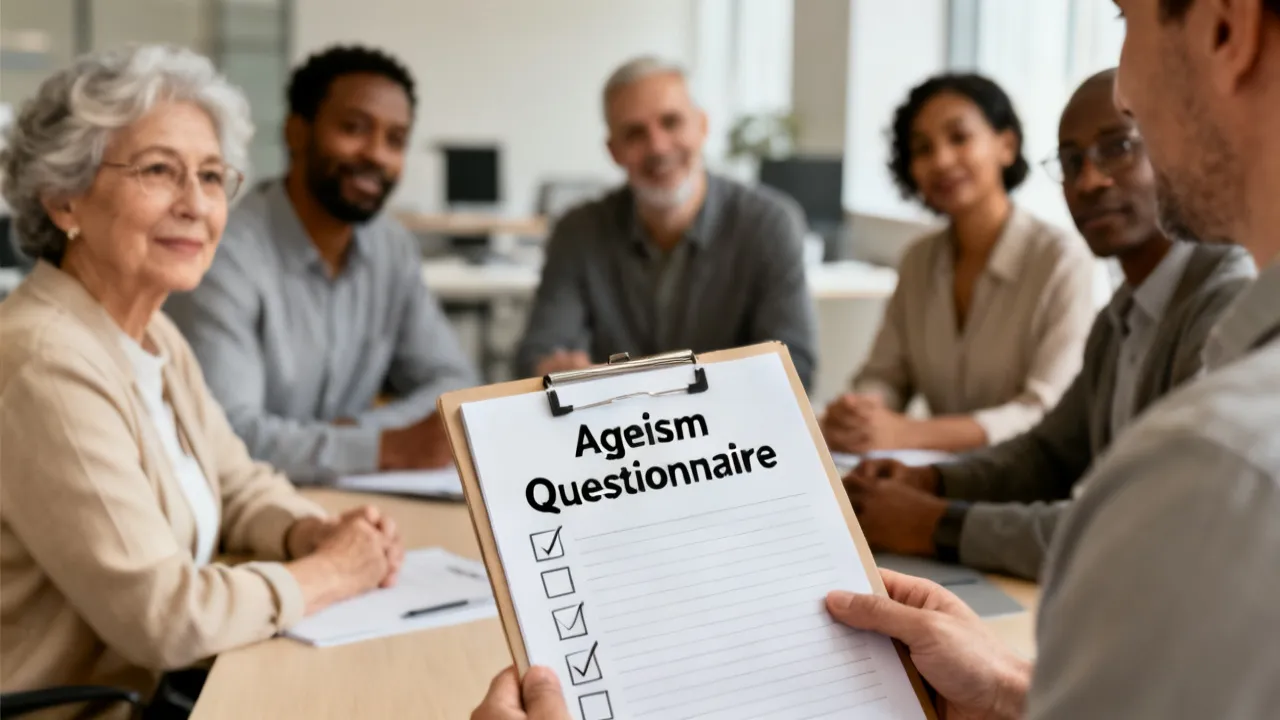
Using an Ageism Questionnaire for Fairer Workplaces

How an Ageism Questionnaire Supports Workplace Fairness
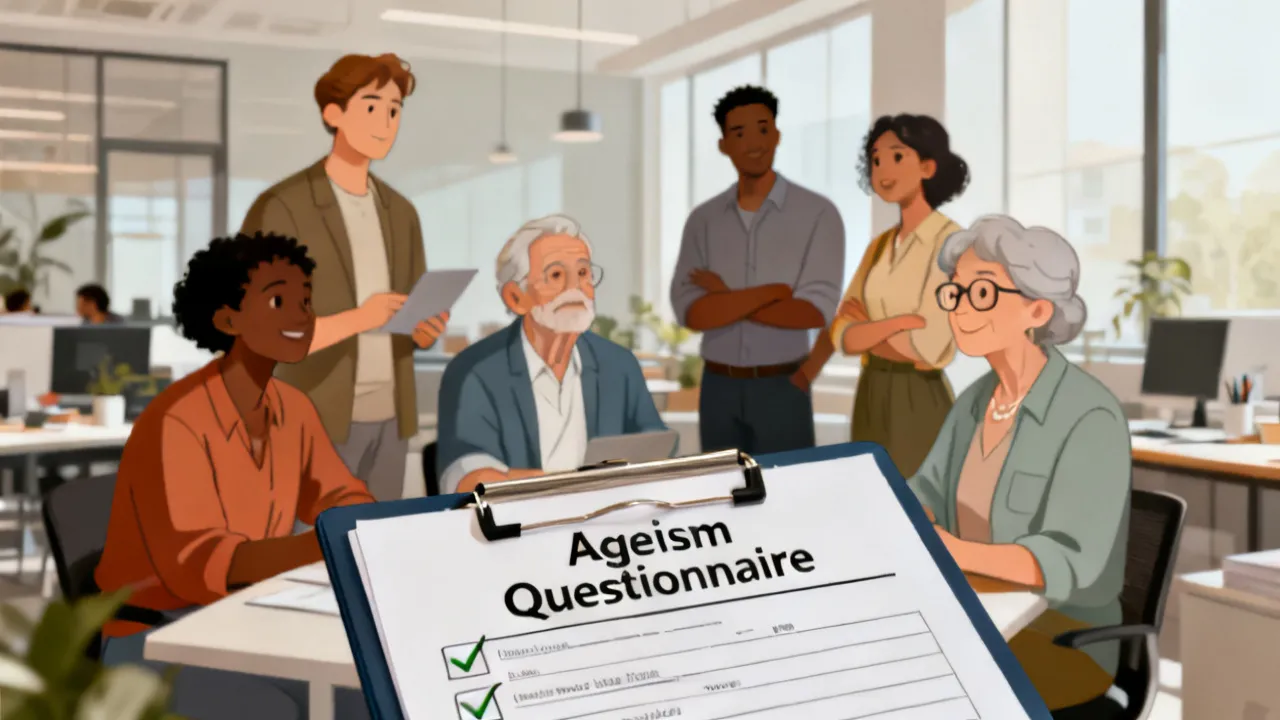
Practical Use of an Ageism Questionnaire in Organizations

Using an Ageism Questionnaire for Fair Workplace Culture

Using an Ageism Questionnaire for Fairer Workplaces

Using an Ageism Questionnaire for Fair Workplace Decisions
This guide explains how to design, administer, and interpret an Ageism Questionnaire to support fair hiring, retention, and training decisions. Ageism in employment affects communication, evaluation, and access to opportunities. Background sections define the concept, outline measurement principles, and connect questionnaire results to practical interventions. You’ll also find a conditions-and-requirements comparison and a step-by-step approach for responsible use.
Using an Ageism Questionnaire for Workplace Fairness
This guide explains how an Ageism Questionnaire helps organizations detect age bias, improve HR decisions, and strengthen inclusion. It provides objective background on the concept of age discrimination, what such tools assess, and why structured evaluation matters in hiring, promotion, and learning opportunities. The article also covers practical implementation conditions, supplier considerations, and FAQs for steady governance.
Using an Ageism Questionnaire for Fairer Workplaces
This guide explains how an Ageism Questionnaire helps organizations measure age-related bias in hiring, training, and career progression. It offers objective background on what “ageism” means, why assessment matters, and how to structure questions responsibly. You’ll also find practical criteria for administering the tool, plus an expert-informed FAQ to support consistent, ethical use.
How an Ageism Questionnaire Supports Workplace Fairness
This guide explains how to use an Ageism Questionnaire to detect age-based bias in workplaces and public services. It then provides objective background on what “ageism” means, why structured measurement matters, and how organizations can translate results into fairer policies and training grounded in reliable research and common compliance principles.
Practical Use of an Ageism Questionnaire in Organizations
This guide explains how to use an Ageism Questionnaire to identify age-based bias in workplaces, inform fair training, and improve inclusion. Ageism Questionnaire tools are grounded in established research on discrimination and organizational behavior. The article compares implementation pathways, required conditions, and practical scoring considerations, with an expert view and FAQ coverage.
Using an Ageism Questionnaire for Fairer Workplaces
This guide explains how to use an Ageism Questionnaire to identify age-related bias, reduce risk, and improve workplace fairness. “Ageism” refers to discriminatory attitudes or practices based on age; an Ageism Questionnaire is a structured tool used for awareness, assessment, and targeted improvements. Background sections outline why measurement matters, what to look for, and how to respond responsibly.
